
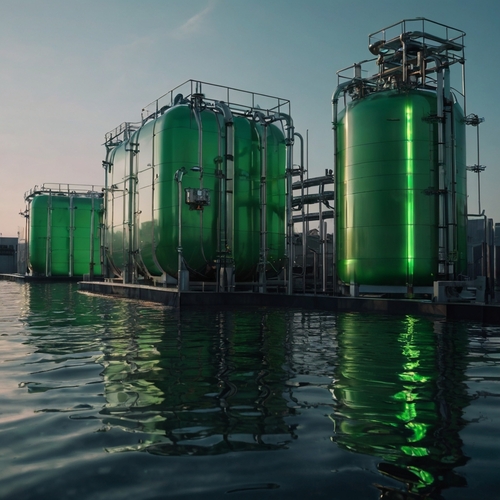
The GCC Green Hydrogen Market is poised for significant growth as the region looks to diversify its energy sources and reduce dependence on fossil fuels. With an abundance of solar and wind energy potential, the Gulf Cooperation Council (GCC) countries are positioning themselves as key players in the global green hydrogen race. This shift is driven by a combination of environmental, economic, and geopolitical factors, making green hydrogen a central element in the region’s future energy landscape.
Increasing Investment in Renewable Energy
One of the major trends driving the growth of the GCC Green Hydrogen Market is the increasing investment in renewable energy projects across the region. Countries like Saudi Arabia, the UAE, and Oman are leading the charge by developing large-scale solar and wind farms to power hydrogen production. These renewable energy projects are crucial for reducing the carbon footprint associated with hydrogen production, ensuring the region remains aligned with global sustainability goals.
Strategic Partnerships and International Collaborations
The GCC region is also seeing a surge in strategic partnerships and collaborations with international players. European and Asian countries, in particular, are keen to secure partnerships for green hydrogen imports, recognizing the region’s vast renewable energy resources. These partnerships not only provide financial and technological support but also position the GCC as a key supplier of green hydrogen to global markets. For instance, Saudi Arabia’s NEOM project, a $500 billion megacity, includes plans to become a global leader in green hydrogen production.
Development of Hydrogen Infrastructure
As the GCC Green Hydrogen Market grows, so does the need for robust infrastructure to support hydrogen production, storage, and distribution. Countries in the GCC are investing in the development of hydrogen refueling stations, pipelines, and export terminals. This infrastructure will be critical in ensuring that green hydrogen can be produced at scale and transported efficiently, both within the region and to international markets.
Policy Support and Government Initiatives
Government support is another key factor driving the green hydrogen market in the GCC. Many countries in the region have introduced policies and regulatory frameworks aimed at accelerating the adoption of green hydrogen technologies. Saudi Arabia, for instance, has committed to becoming carbon-neutral by 2060, with green hydrogen playing a central role in this transition. The UAE has also set ambitious targets to reduce carbon emissions, with hydrogen seen as a critical tool in achieving these goals.
Technological Advancements
Technological advancements in electrolysis, the process used to produce green hydrogen from water, are helping to drive down the cost of hydrogen production. This is making green hydrogen a more viable alternative to traditional fossil fuels. As more research and development is directed toward improving the efficiency of electrolysis, the cost of green hydrogen is expected to decrease further, making it increasingly competitive with other energy sources.
Future Outlook
Looking ahead to 2031, the GCC Green Hydrogen Market is expected to experience exponential growth. The region’s abundant renewable energy resources, coupled with strong government support and international partnerships, are positioning the GCC as a global leader in the production and export of green hydrogen. As the world moves toward a carbon-neutral future, the GCC’s strategic investments in green hydrogen will not only enhance its energy security but also create new economic opportunities for the region.
No responses yet